
What Are the Differences Between a Female and a Male Hairline?
The upper half of your face tells the world very much about your gender, and your hairline is a critical aspect of facial gender confirmation because it essentially “frames” your entire face. A masculine hairline is typically further back on the skull than a feminine one, creating the appearance of a larger, more prominent forehead. In comparison, the feminine hairline is lower down on the forehead and more rounded in shape, with hair appearing more graduated or “wispy” at its edges. If you are seeking a more feminine aspect, you will need to lower your male hairline into the normal feminine range of hairline height and shape.
How Does Hairline Lowering Work Within the Context of Facial Gender Confirmation?
Feminizing hairline lowering, or scalp advancement as it is also known, is ideal for facial gender confirmation candidates who may have a naturally higher hairline and/or larger forehead. It is also not uncommon for us to lower or reshape the hairline of non-transgender individuals who have receding hairlines. The objective of the procedure is to reduce the amount of height between the eyebrows and the hairline, to bring the position of the scalp forward, and to alter the shape of the hairline. The procedure is usually included within a larger set of procedures that comprise facial feminization, which is typically undertaken in a single session of long-format surgery.
“I finally have a body that made me feel at home and at peace."
Watch success stories
“I just want to continue to navigate the word as me and continue to collect new experiences.”
Watch success stories
"I am now able to live my life and have the option to be who I am."
Watch success stories


How Is Hairline Lowering Performed?
The surgery is performed by making a trichophytic incision along the natural hairline and then bringing the hair-bearing tissue of the scalp forward. Individual hair follicles may then be transplanted after closure to further feminize the shape of the hairline and create a more natural-looking hairline.
What Is the Timeframe for the Healing Process?
Scalp advancement has minimal post-surgery pain. The most common side effect is slight facial swelling in the forehead and the eye area. It may require up to seven days for the swelling and discomfort to subside completely. Accordingly, many patients will take a week off from work, but it is possible to return to light activities after two or three days and a normal activity level after a week. Patients may also experience short-term and harmless numbness near the front of the scalp, which will subside after a few months.
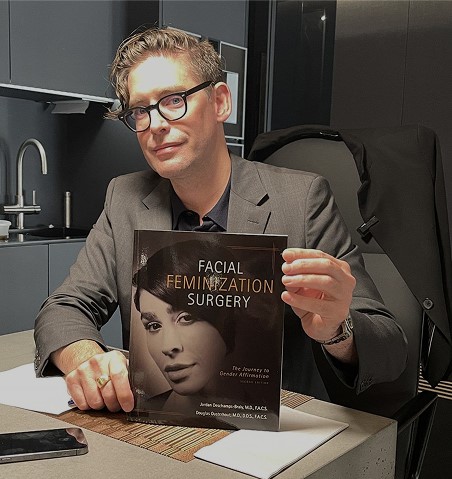
Facial Feminization Surgery: The Journey to Gender Affirmation
Dr. Deschamps-Braly’s book “Facial Feminization Surgery: The Journey to Gender Affirmation” is back and available now. This second edition covers advances in facial feminization, as well as helpful patient stories, and is a great resource for FFS patients and their loved ones.
Order Copy On Amazon
Download Our Hairline Lowering Surgery Guide
Download Guide




 Watch the truth unfold